

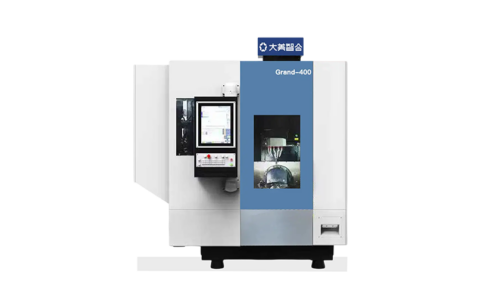



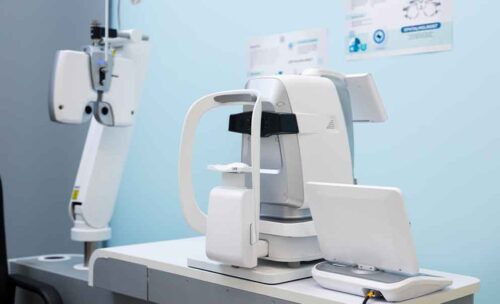
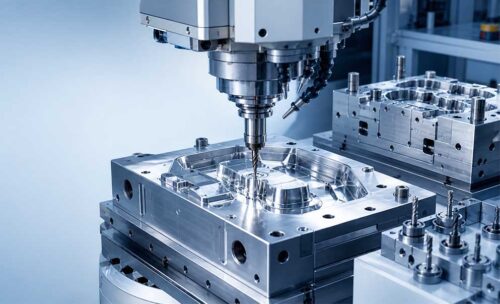






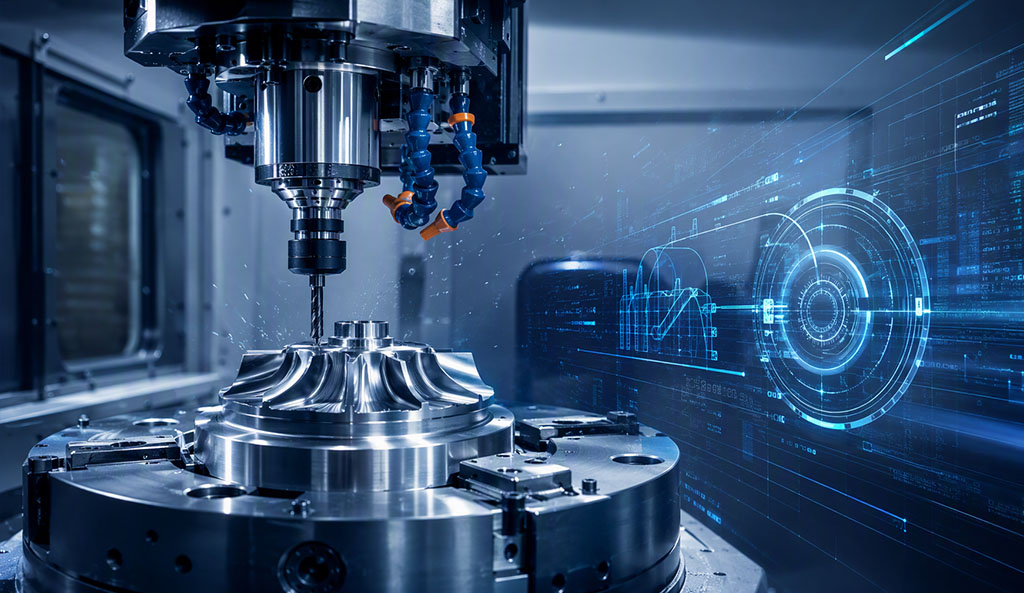
2026 marks a critical transition for the global machine tool industry—from the CNC generation to the intelligent generation. Machine tools, the “mother machines” of precision manufacturing, directly determine a nation’s manufacturing competitiveness. Notably, according to Research and Markets, the global metalworking machine tool market will reach USD 91–122 billion in 2026, growing 5–8% annually through 2031. The core growth driver is shifting from capacity expansion to technological innovation in AI CNC systems, five-axis simultaneous machining, and digital twins. From an international perspective, this article reviews the machine tool industry’s classification and analyzes how these frontier technologies land and transform manufacturing models.
To understand the technological evolution of the machine tool industry, one must first grasp its classification framework. According to internationally accepted classification standards, machine tools can be divided by material forming method into two major functional categories: metal cutting machine tools and metal forming machine tools. There are also special processing machine tools and woodworking machine tools as further subcategories.
Metal Cutting Machine Tools — This is the largest and most widely used category in the machine tool industry. It removes excess material from workpieces through tool cutting to achieve precision dimensional machining and high-precision surface forming.
By specific function, it is further divided into:
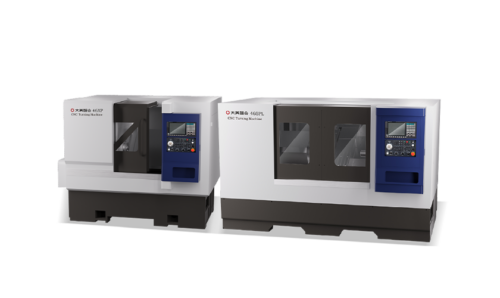
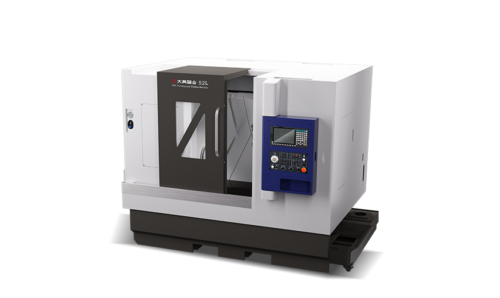
lathes (machining rotational parts)
— the latter, because of their automatic tool changing and multi-process compound capabilities, are the most CNC-intensive and technologically rich category of machine tools. Metal cutting machine tools hold ~45% of the machine tool market; mid-range localization reaches 85%.
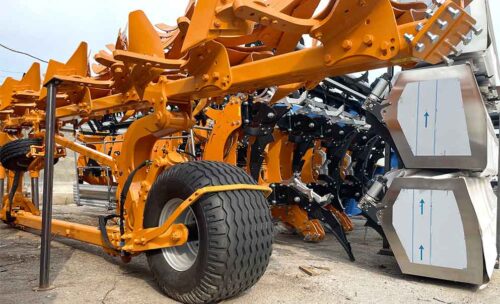
— Also known as forging and pressing machinery, these use pressure, bending, stamping, shearing, and other processes to cause plastic deformation of metal sheets and profiles without removing material.
They mainly include :
They are widely used in automotive bodies, battery trays, and other scenarios. This category holds ~30% market share, ~70% domestic localization, though high-end hydraulics remain imported.
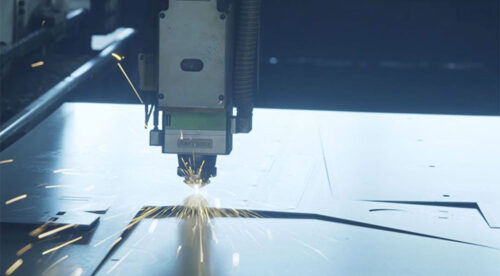
Special Processing Machine Tools — These use non-mechanical energy (laser, EDM, ultrasonic, etc.) to process superhard or complex materials, including electrical discharge machining (EDM) machine tools, laser cutting machines, and additive manufacturing equipment (metal 3D printing). This category accounts for approximately 25% of the market and is the fastest-growing segment.
By control method, machine tools can be divided into :
— The latter control tool-workpiece motion via pre-programmed instructions, enabling automated, high-precision machining of complex shapes.
By controlled axes, they are divided into three-, four-, and five-axis machining centers.
— Five-axis machine tools add two rotary axes and can machine complex curved parts, making them the most technically difficult. By structural form, they are divided into vertical machining centers, horizontal machining centers, and gantry machining centers.
Each machine tool type has advantages in accuracy, efficiency, and applications, together forming a complete manufacturing system.
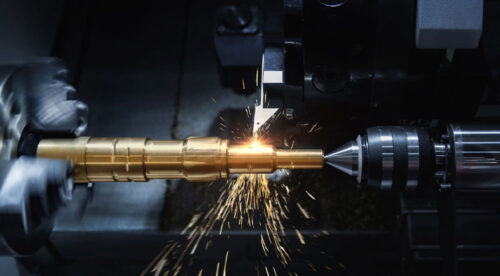
— The most basic and versatile cutting machine tools, they complete external cylindrical, end face, thread, and other machining through workpiece rotation and linear tool movement. Their advantages lie in high machining efficiency and simple operation. Ideal for mass production of shafts, discs, sleeves, and rotational parts; main equipment in automotive, hydraulic, and bearing industries.
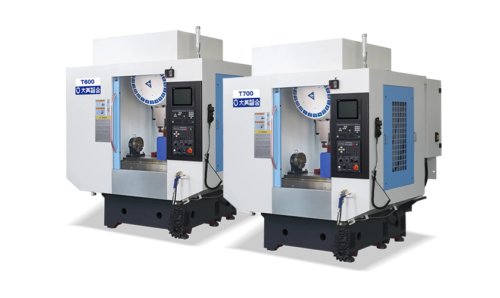
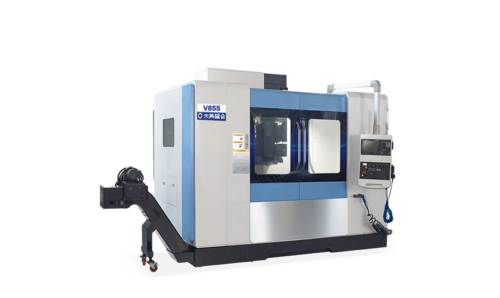
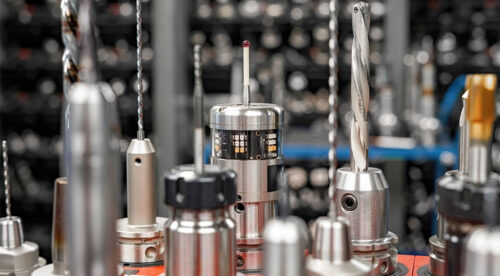
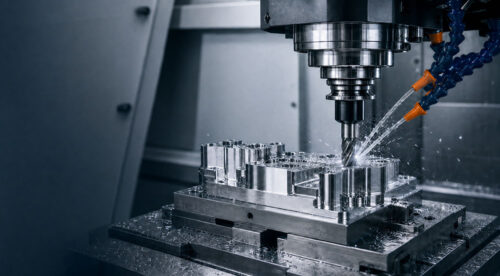
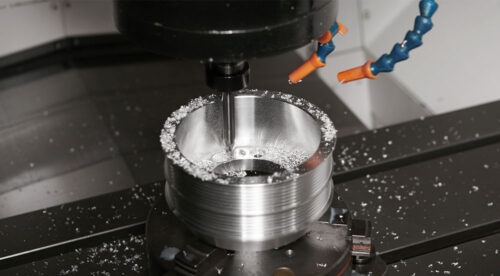
— Machining centers integrate multi-process compound capabilities and can complete milling, drilling, boring, tapping, and other processes in a single setup. Their core advantages are reduced setup times, improved machining accuracy consistency, and shortened production cycles. CNC milling machines held the largest 2026 global CNC market share, while multi-tasking machines will grow fastest. Machining centers widely produce automotive engine blocks, aerospace structural parts, mold cavities, and 3C electronic parts.
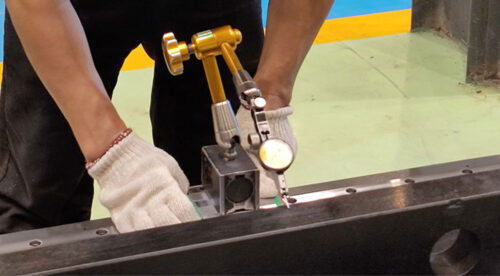
— core finishing equipment, use high-speed wheels to remove microscale material for extreme accuracy and surface quality. Their advantages lie in machining accuracy reaching the micron level and low surface roughness. They are suitable for parts with extremely high precision requirements, such as bearing raceways, guide surfaces, and tool edges.
— Represented by stamping and bending, their core advantages are extremely high efficiency in mass production and good material utilization. Presses can complete complex-shaped blanking or forming in a single stroke, and manufacturers widely use them in large-scale production of automotive body panels, home appliance housings, and battery trays.
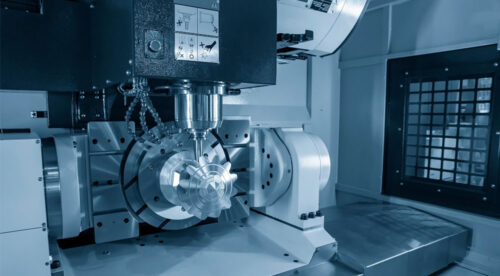
— The “crown jewel” of the machine tool industry, capable of simultaneously controlling the X, Y, and Z linear axes and the A/B/C rotary axes to achieve single-setup machining of complex curved surfaces, deep cavities, and undercut structures. Their advantages include greatly increased machining freedom, significantly reduced setups, and the ability to machine complex geometries impossible with traditional three-axis machine tools. The application fields of five-axis machine tools have expanded from aerospace to new energy vehicle integrated die-casting parts, humanoid robot joint parts, low-altitude economy aircraft structural parts, semiconductor vacuum chambers, and medical implants. The global five-axis CNC machining center market is expected to grow by approximately USD 900 million from 2025 to 2030, with a compound annual growth rate of 6.2%.
— lasers cut sheet metal fast; EDM machines cut superhard conductive materials; additive manufacturing builds conformal cooling channels.
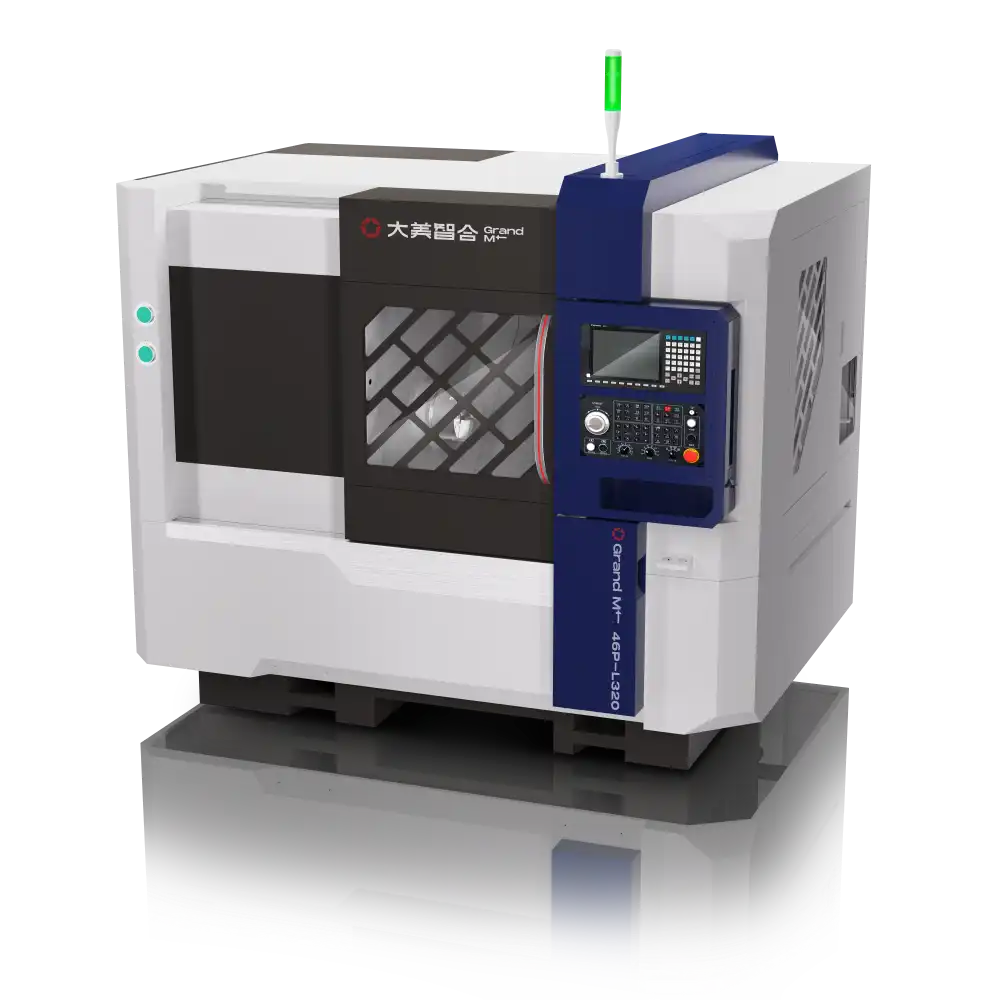
The landing of AI in the machine tool industry showed a qualitative leap in 2026. Dassault Systèmes says AI-driven machining moves from prediction to adaptive correction, adjusting feeds, speeds, and tool paths in real time.
International manufacturers’ layouts in this direction are particularly noteworthy.DMG MORI demonstrated at Hannover Messe 2026 how AI creates value across the entire CNC process chain.Its example: the titanium alloy keel bearing of IMOCA yacht “DMG MORI Global One,” a complex aerospace part. The demonstration covered complete turn-mill machining in a single setup, including turning, drilling, and simultaneous five-axis milling, and continuously monitored spindle load, vibration, and feed behavior through the CELOS X platform’s MPC (Machine Protection Control) function, using AI to automatically detect and clear chip accumulation.
FANUC released its new 500i-A series CNC controller at AMB 2026. The control system delivers high machining performance, intuitive operation, and digital integration. Its combination with digital twins allows users to review and optimize machining processes and apply the results to actual machine tool operation, bringing shorter cycle times and enhanced five-axis machining functions. FANUC has also partnered with NVIDIA and Google to advance Physical AI, demonstrating AI solutions such as Agentic Digital Twin.
Mazak’s MAZATROL SmoothAi CNC system demonstrates deep AI application in vibration suppression. Its Smooth Ai Spindle function uses vibration sensors to detect the onset of chatter and automatically adjusts spindle speed and feed rate in real time, continuously learning and optimizing from operators, historical cutting processes, and data inputs. Okuma’s OSP-P500 controller introduces AI-driven thermal learning technology. Its Thermo-Friendly Concept ensures accuracy consistency from cold start to long periods of unmanned production through intelligent structural design and temperature compensation. Tests show that a real-time thermal error compensation system can effectively control the thermal error of the machine tool spindle and Z-axis ball screw within 8 μm.
Five-axis simultaneous machine tools are penetrating from a few high-end scenarios to a broader range of manufacturing fields. Meticulous Research expects five-axis machine tools to post the CNC market’s highest CAGR and fastest growth.
DMG MORI released the second-generation NMV 3000/5000 DCG five-axis vertical machining center in March 2026. Its key innovation, process integration, lets manufacturers complete complex parts with fewer setups, transfers, and errors. DMG MORI launched LASERTEC 65 DED hybrid 2, combining laser deposition with milling, drilling, turning, grinding, and 3D scanning.
FANUC equips its ROBODRILL D28LiB5ADV PlusY-500 with a 28-station automatic tool changer and five-axis table for larger, complex parts. Mazak launched the new-generation high-precision five-axis vertical machining center VARIAXIS C-600, demonstrating deep integration of multi-tasking, five-axis machining, and automation.
From the application side, the industry coverage of five-axis machine tools is expanding rapidly. In aerospace, domestic five-axis machine tools now batch-machine gas turbine blades and large aircraft structural parts. They also complete about 70% of the titanium alloy structural parts in the C919 mass production phase. In the medical field, five-axis milling-grinding compound machining centers can effectively machine implant components such as hip joints. The new energy vehicle field, five-axis machine tools are used for integrated die-casting parts and motor housings. In the semiconductor field, five-axis machine tools are expanding into vacuum chamber and vacuum pump machining.
Digital twins in machine tools now evolve from tool-path visualization into living ecosystems integrating design, process, machining, and inspection. Real machining data continuously corrects simulation accuracy, making each production cycle smarter than the last.
Siemens’ SINUMERIK ONE is the world’s first “digitally native” CNC system, featuring an “AI + digital twin” technology path. It integrates design, manufacturing, virtual CNC, and digital twin simulation to connect the CAD/CAM/CNC chain from part design to maintenance. Siemens and DMG MORI offer machine-tool digital twins on Xcelerator Marketplace, letting operators write NC programs and check collisions.
DMG MORI has equipped over 10,000 delivered machine tools with CELOS X, a unified platform linking machines, processes, and applications. Its Run MyVirtual Machine software supports programming and simulation for SINUMERIK ONE, enabling complete digital twin programming and verification. FANUC integrated ROBOGUIDE into NVIDIA Isaac Sim, creating accurate digital twins for simulating, teaching, and verifying robot motions virtually. Mitsubishi Electric’s digital twin with RWTH Aachen corrects CNC errors in real time, advancing offline simulation to online closed-loop control.
Two major late-2026 machine tool shows reflect tech integration; AMB 2026 unites FANUC, DMG MORI, Okuma, showcasing AI, digital twins. IMTS 2026 (Chicago, Sept 14–19) spans 1.2M sq ft with 1,800 exhibitors, covering AI, automation, additive manufacturing, digital twins, metrology.
From the confirmed exhibits, the direction of innovation in 2026 has shifted from “making machine tools faster” to integrating five-axis machining, multi-tasking, automation, additive manufacturing, digital twins, and intelligent control into complete production systems. DMG MORI’s LASERTEC 65 DED hybrid 2 and Matsuura’s LUMEX Avance-25 represent the latest advances in hybrid manufacturing platforms. At IMTS 2026, the latter showed how additive-subtractive fusion simplifies production and unlocks complex part designs.
From an international perspective, three main lines are increasingly clear in the technology frontier of the machine tool industry in 2026: AI CNC systems are evolving from auxiliary tools into the intelligent core of machine tools, driving machining processes from passive execution to adaptive correction; five-axis simultaneous technology is transforming from an aerospace-exclusive capability into a cross-industry general manufacturing platform, with process integration and hybrid manufacturing becoming core value propositions; and digital twins are upgrading from design verification tools to a production backbone spanning the entire manufacturing life cycle, achieving continuous two-way feedback between the virtual and physical worlds. Interwoven with one another, these three are redefining the efficiency and quality boundaries of precision manufacturing. Global manufacturers must grasp these technologies’ landing paths to stay competitive in the next competitive cycle.
 Industry
 Products
 Products
 Products
 Products
 Products

English

French

Portuguese

Spanish