

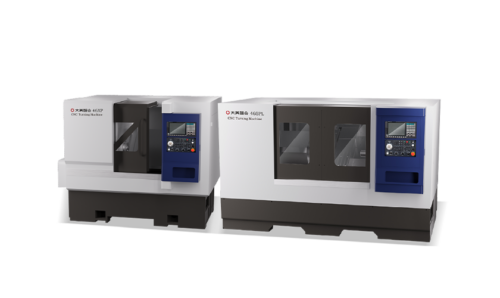
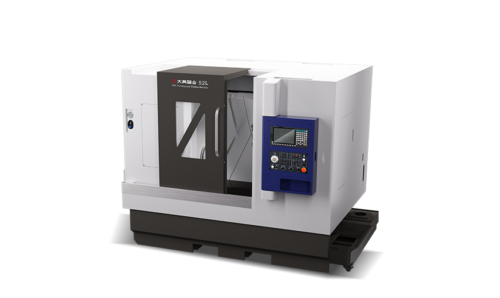
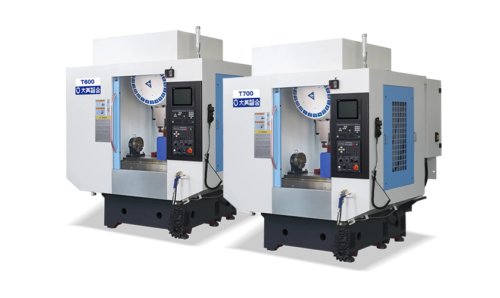
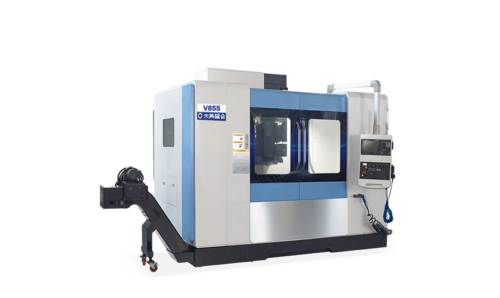
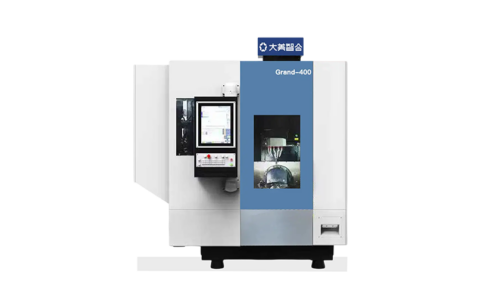








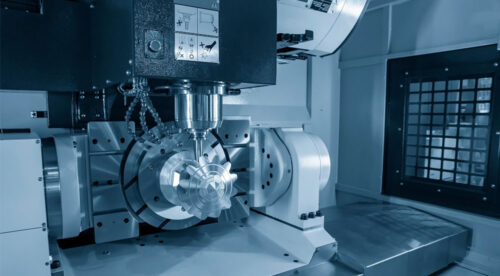
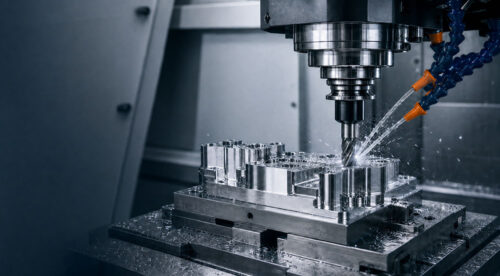
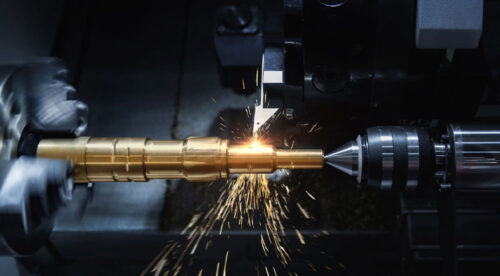
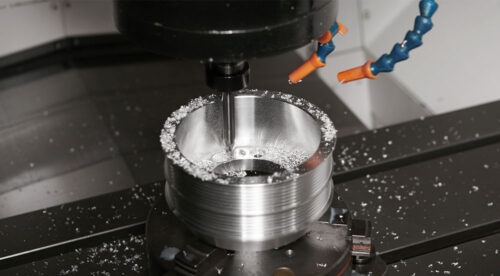

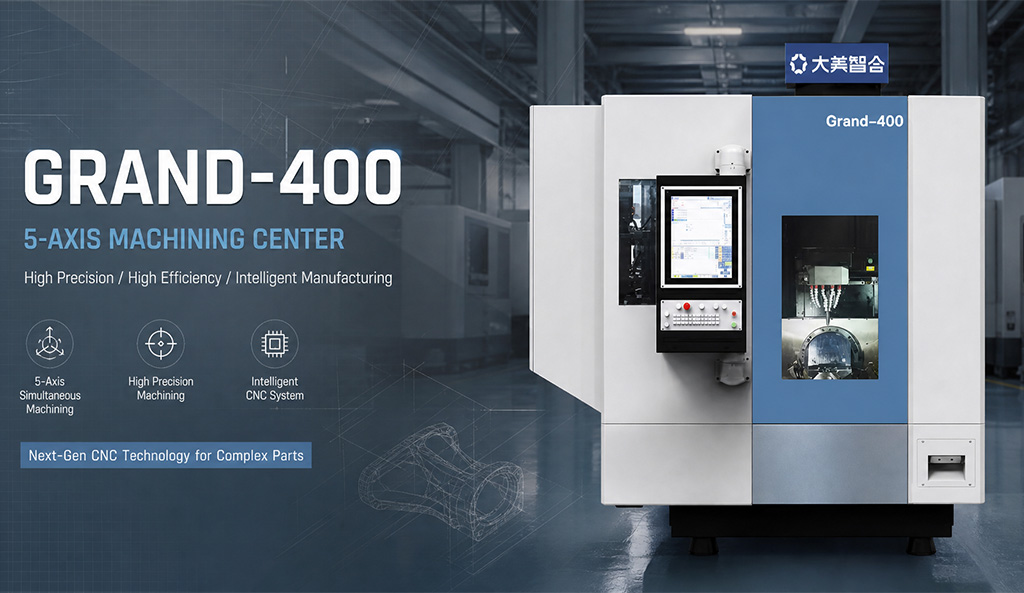
A few years ago, 5‑axis CNC machining centers remained the exclusive domain of large enterprises and military contractors. Today, 5‑axis simultaneous machining centers are rapidly moving from “niche high‑end” to “industry standard.” High‑end 5‑axis machines are quickly becoming smaller, lighter, and more affordable. Precision 5‑axis machining, once monopolized by big corporations, now enters the workshops of small‑to‑medium machining shops, precision engineering studios, and university research teams
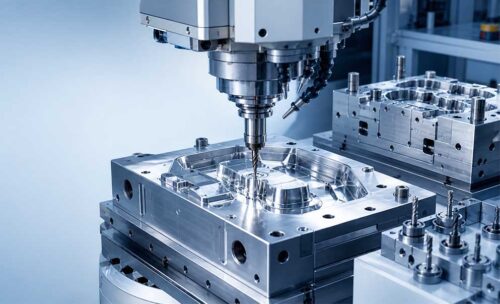
A small 5‑axis machining center builds on the traditional 3‑axis machining center (X, Y, Z linear axes) by adding two rotary axes (common combinations: A+B, A+C, or B+C), enabling simultaneous control of all five axes. The core value of a 5‑axis simultaneous machining center lies in this: the tool can approach the workpiece from any angle, always maintaining the optimal cutting posture, and completes complex surface machining in a single setup.
Compared with large 5‑axis equipment, a small 5‑axis machining center offers a more compact travel range, smaller footprint, and quicker dynamic response, making it especially suitable for high‑volume production of small‑to‑medium precision parts. It is not merely a scaled‑down version of a large 5‑axis machine.
Although a 5‑axis machining center costs more than a 3‑axis machine, the benefits it brings more than offset that extra investment. Key advantages of using a 5‑axis CNC machine include:
In summary, 5‑axis CNC machines let your machining shop produce better, more precise parts in less time, while reducing machine wear. All of this translates into higher profit margins.
| Comparison Dimension | 3‑Axis Machining Center | Small 5‑Axis Machining Center |
| Setups | Multiple setups, cumulative errors | One setup, five‑side machining |
| Complex surfaces | Difficult or requires special fixtures | Easy, normal‑direction cutting |
| Surface quality | Affected by setups and refixturing | Consistent, high smoothness |
| Delivery lead time | Long due to multiple setups | Dramatically shortened |
| Manual intervention | Frequent refixturing, high labor intensity | Highly automated |
5‑axis machining finds very broad applications, and its core value lies in efficiently and accurately machining structurally complex parts. In general, any industry with geometrically complex parts, difficult‑to‑machine materials, precise feature relationships, or requiring multiple setups can significantly benefit from 5‑axis technology.
Below are the major beneficiary industries and their typical parts:
This industry represents the traditional stronghold of 5‑axis technology, and many critical parts are only producible with 5‑axis machining.
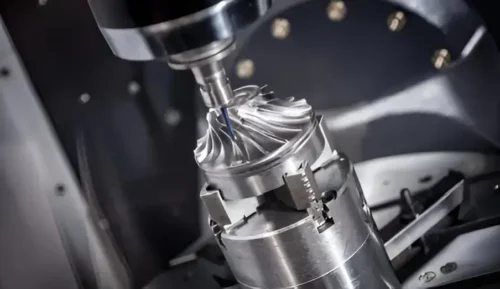
Typical parts: turbine blades, engine casings, impellers, structural brackets, landing gear components, wing ribs, skin panels, etc.
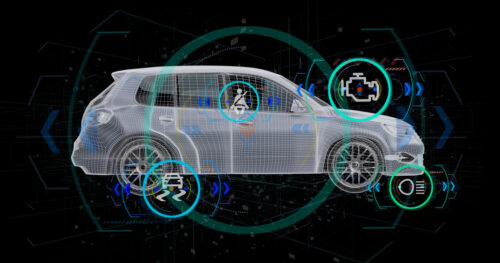
As vehicles shift toward lightweight construction and new energy solutions, 5‑axis machining demand is growing rapidly.
Typical parts:
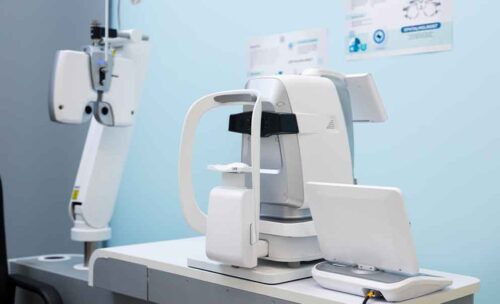
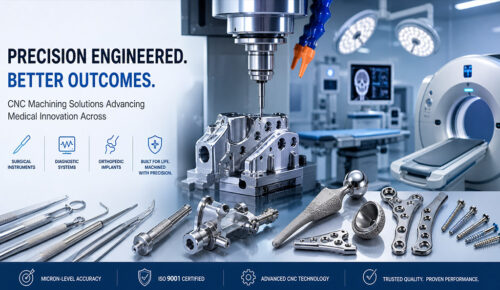
The medical field pursues extreme precision and surface finish, with parts often highly customized.
Typical parts: orthopedic implants (e.g., artificial knee and hip joints), dental components, surgical instruments, precision instrument hardware, etc.
Energy equipment demands extremely high reliability and durability.
Typical parts: impellers, valves, pump bodies, compressor components for oil, gas, and power generation.
This is a rapidly growing and highly promising application area for 5‑axis machining.
Typical parts: joint housings, harmonic reducers, dexterous hands, structural frames, thigh adapters, etc.
When evaluating a 5‑axis machining center, in addition to price, we should focus on the following key factors:
Choose a machine with X, Y, Z travels and table load capacity (including dimensions and weight) that match the largest workpieces you plan to machine. Oversized travels increase cost, while undersized travels limit future processing needs.
Always ask the dealer for details such as Y‑axis travel, spindle nose‑to‑table distance at 90°, maximum tool length, and part weight capacity.
Spindle specification sheets often list rated torque (S1, continuous) and maximum torque (S6, short‑term overload). For continuous heavy cutting, check the S1 continuous torque – do not be misled by “maximum” values. For example, high‑speed spindles suit aluminum alloys, while machining steel or titanium requires low‑speed high‑torque spindles.
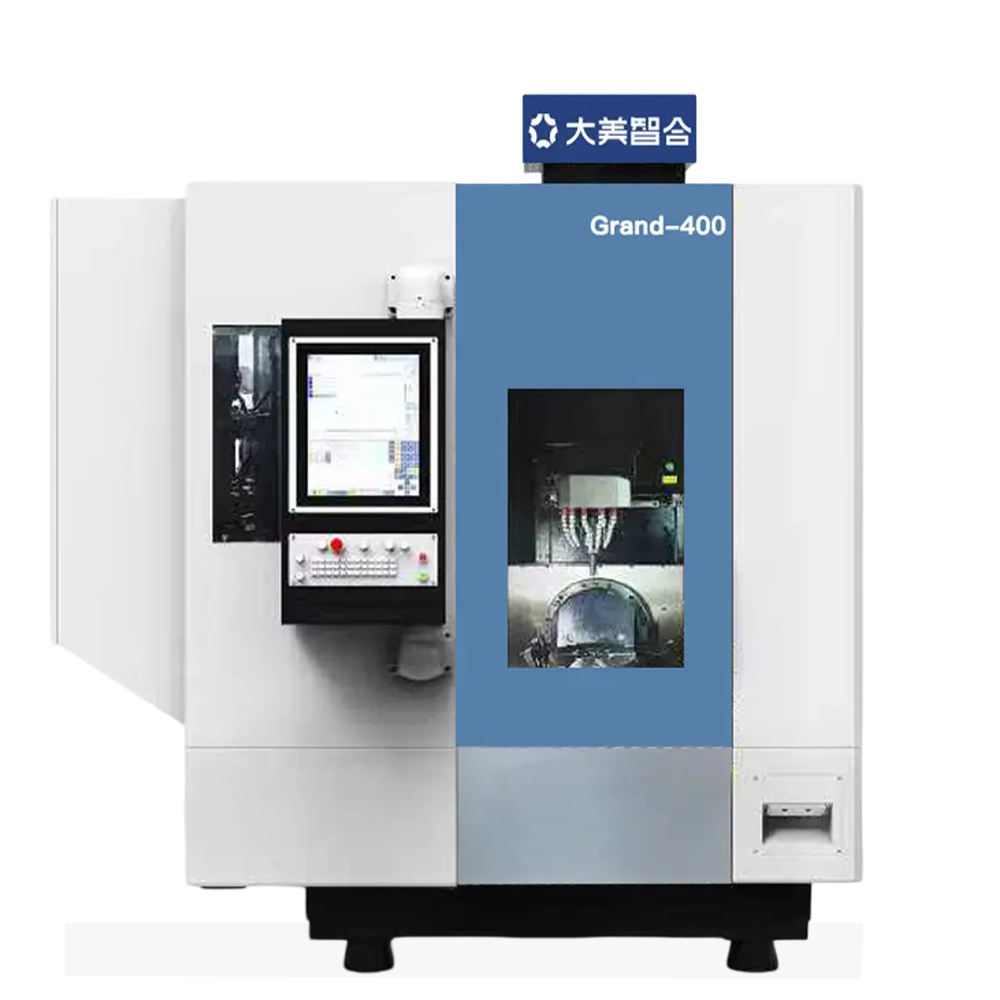
The market offers more and more 5‑axis machining center brands and models, which can be overwhelming. Grand CNC’s small 5‑axis simultaneous machining centers have several tangible features that deserve your serious consideration:
We use high‑strength resin‑sand cast iron with a rib‑reinforced structure that effectively damps vibration, maintaining excellent surface quality even during high‑speed continuous machining. The high‑rigidity body design ensures stable machining accuracy after long‑term operation.
Grand CNC small 5‑axis machining centers occupy a small footprint yet provide ample work envelope. For workshops or labs with limited space, this means you can upgrade from 3‑axis to 5‑axis capabilities without expanding your facility.
We offer various spindle speeds, tool magazine capacities, and automation options. Whether you need high‑speed finishing or heavy cutting, Grand CNC can tailor the most suitable small 5‑axis CNC machining center configuration for you.
Grand CNC small 5‑axis CNC machines support major systems like FANUC, Mitsubishi, and Siemens, and we reserve automation interfaces for easy integration into your existing production flow.
From selection evaluation and installation to commissioning and training, the Grand CNC technical team stays with you throughout the journey. We offer not just equipment, but complete solutions spanning process planning to production optimization.
This is a fundamental but critical question. If your parts meet any of the following conditions, a small 5‑axis simultaneous machining center is worth considering: complex curved surfaces or irregular shapes; requiring multiple setups to complete all machining; high surface finish requirements that 3‑axis cannot achieve; or you want shorter lead times and less manual intervention. 5‑axis machining reduces setups, enhancing accuracy stability.
Focus on five key aspects: structural type (cradle or gantry), rotary table drive method, accuracy and closed‑loop configuration, spindle performance, and whether the CNC system includes RTCP functionality. Start by matching the structure to your workpiece size and material, then score each of these five criteria – this prevents sales pitches from misleading you.
“3+2” means we position the two rotary axes at specific angles, lock them, and then use the three linear axes for machining; 5‑axis simultaneous means all five axes move together during processing. If your parts require machining holes and flats at multiple fixed angles, “3+2” suffices; but if they involve complex free‑form surfaces (e.g., impellers, blades), you need a true 5‑axis simultaneous machining center. Note that RTCP on some systems (e.g., FANUC, Mitsubishi) is an optional feature – confirm this when purchasing.
That depends on the specific configuration and brand. High‑end 5‑axis CNC machines can achieve positioning accuracies of 0.005 mm or even better. However, remember: 5‑axis accuracy does not equal single‑axis accuracy – we cannot simply say “X‑axis accuracy is 0.002, so the whole machine accuracy is 0.002.” Overall 5‑axis simultaneous accuracy depends on multiple factors: axis coordination, rotary table precision, system control algorithms, etc. When evaluating, ask the manufacturer for actual 5‑axis simultaneous machining test data, not just individual specification numbers.
Prices vary widely, from several hundred thousand to over a million (RMB). Major cost drivers include: structural type (cradle types are more economical), rotary table type (direct‑drive vs. geared), spindle configuration, CNC system brand, and whether RTCP is included. We recommend clarifying your processing needs and budget first, then comparing configurations and quotes from several suppliers.
Beyond the machine price itself, consider: CAM software costs for 5‑axis programming (e.g., Mastercam, NX); operator training time and expenses; tooling and toolholder adaptation costs; and whether the manufacturer has local service centers and adequate spare parts inventory. These “small” items can add up to a considerable sum.
Imported brands indeed have strong technological accumulation in the high‑end 5‑axis field, but their prices are correspondingly high. Grand CNC’s small 5‑axis simultaneous machining center matches mainstream performance standards while offering a more competitive price and greater customization flexibility. For workshops with limited budgets but a real need for true 5‑axis capability, this is a pragmatic choice.
Whether you are a university research lab needing a small 5‑axis machining center for 5‑axis programming teaching, or a precision manufacturing company aiming to elevate your complex‑part machining capabilities to a new level, Grand CNC’s small 5‑axis simultaneous machining center deserves your serious consideration.
Contact the Grand CNC team today – let us recommend the most suitable small 5‑axis CNC machining center solution based on your specific parts and budget.
 Industry
 Products
 Products
 Products
 Products
 Industry

English

French

Portuguese

Spanish